
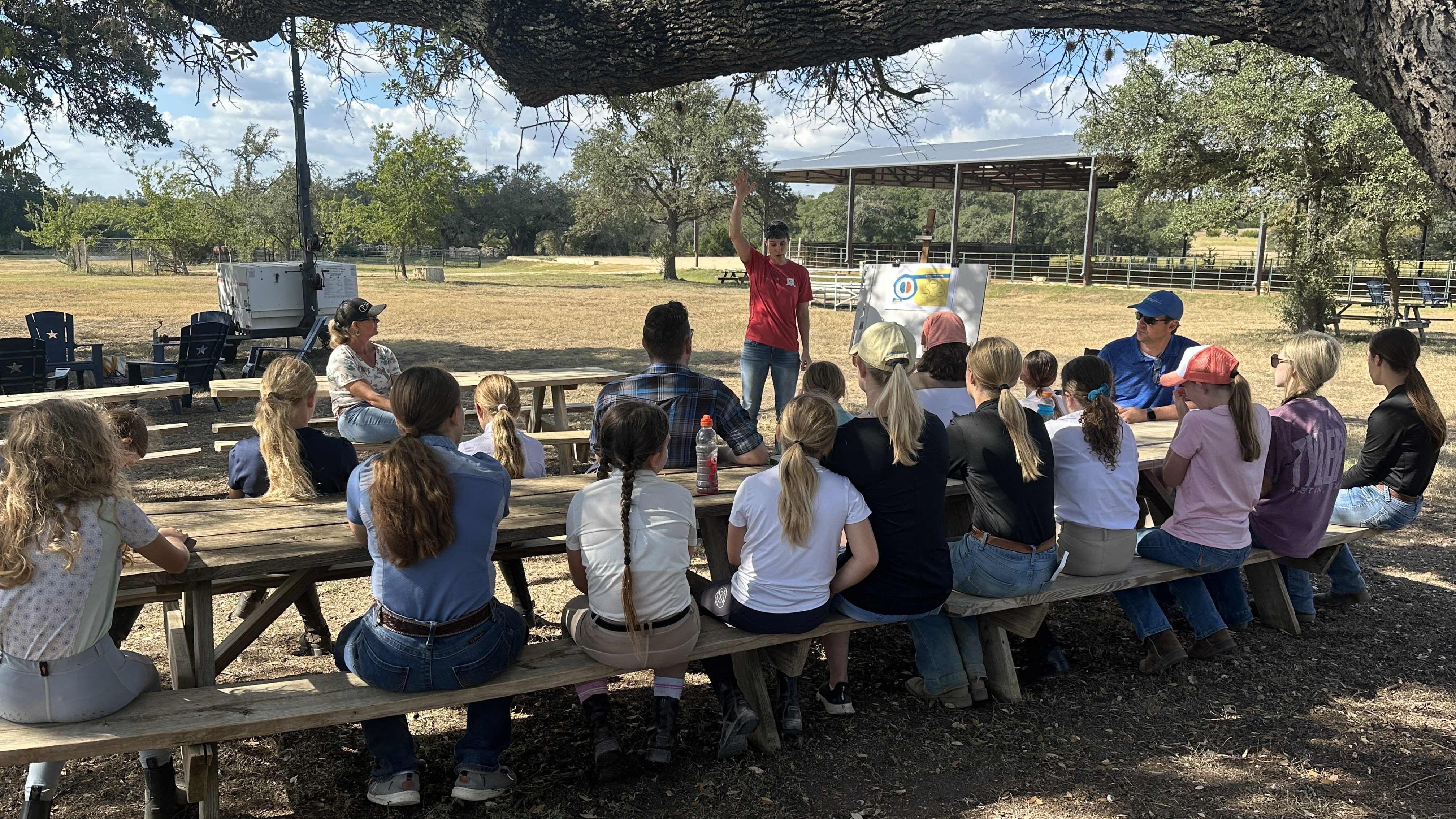
At a recent Pony Club rally preparation workshop, riders and parents gathered for a one-hour communications session led by Stephanie Threinen, founder of Cool, Comms, Collected. Designed for participants ages 8 to 18 and their families, the workshop focused on helping riders communicate with professionalism, courtesy, and confidence—skills that are essential when interacting with judges during both riding classes and Horse Management inspections.
In Pony Club rallies, communication matters. Riders are expected to answer questions clearly about their horse’s care, equipment, and turnout while maintaining good manners and composure. Stephanie emphasized several simple, but powerful habits: always be polite, maintain eye contact, smile to show confidence, and take a moment to think before answering questions. These small actions signal respect and self-assurance and can help riders make a strong impression in both the show ring and inspection area.
The workshop theme was especially fitting for Pony Club participants because the name Cool, Comms, Collected draws inspiration from an equestrian concept. In riding, a “collected” horse is one that is balanced, attentive, and responsive to the rider’s cues—calmly working in harmony rather than reacting impulsively. A collected horse is not at risk of bolting or bucking because it is tuned in to the rider.
But what does that say about the rider? Being “collected” reflects the rider’s mindset and leadership. It suggests someone who is self-assured, thoughtful, and focused—able to remain calm under pressure and respond to challenges with clear thinking rather than frustration. These are the same qualities that make for effective communicators and good teammates.
Stephanie encouraged participants to think about communication not just as something we do with people, but also with horses. Riders constantly read signals from their horses—body language, tension, rhythm, and responsiveness—and adjust their cues accordingly. In many ways, effective riding is a conversation between horse and rider.
A key portion of the workshop focused on learning how to ask better questions. Participants explored the difference between closed-ended questions, which typically lead to short or one-word answers, and open-ended questions, which encourage explanation and deeper conversation. Developing the ability to ask thoughtful follow-up questions can help riders learn more from instructors, teammates, and judges.
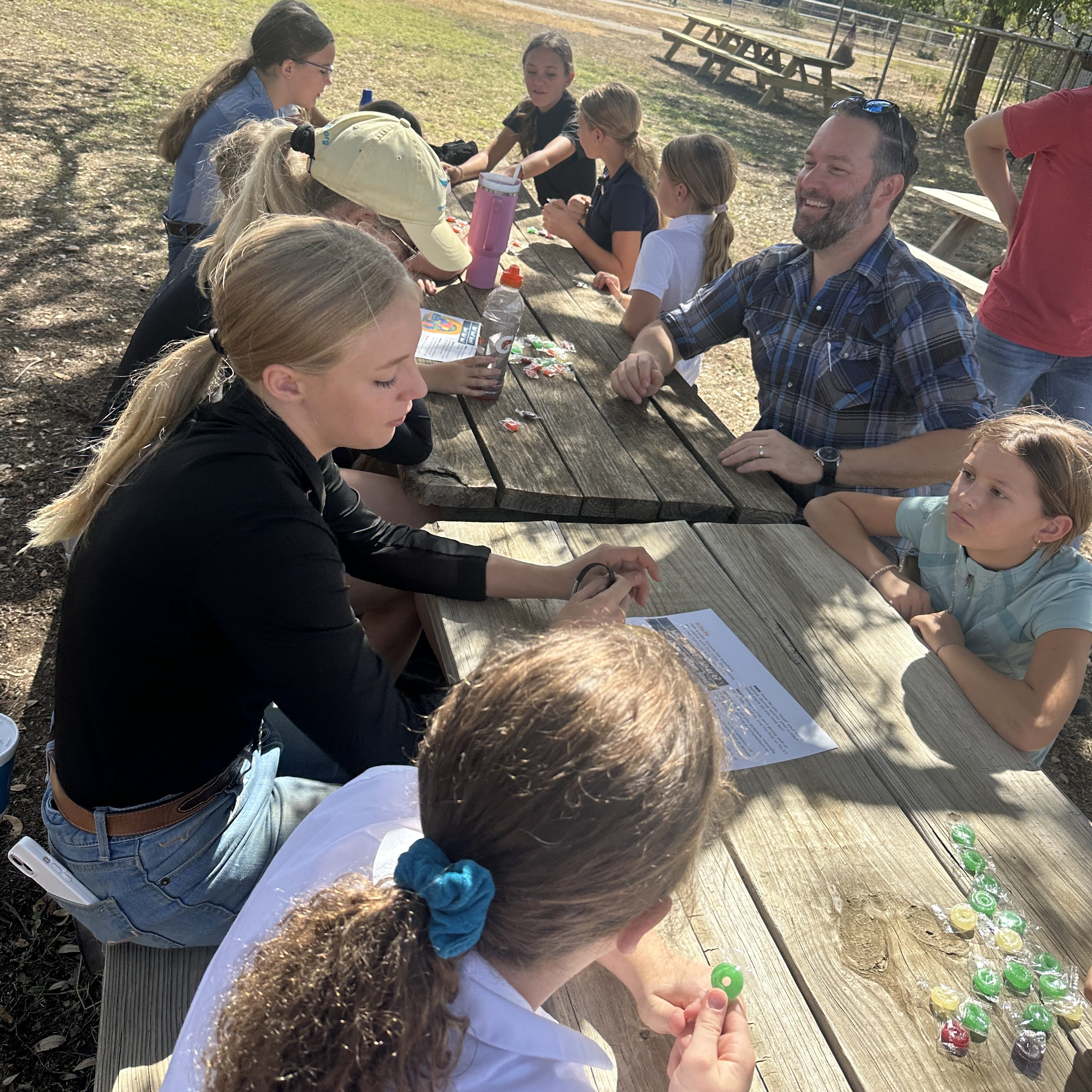
To put these skills into practice, the group played an interactive game that quickly became a favorite—mainly because candy was involved. Each participant selected a piece of candy from a bowl. The color determined which question they would answer, and then another member of their group asked a follow-up question to gather additional insight. The activity helped participants practice listening carefully and responding thoughtfully.
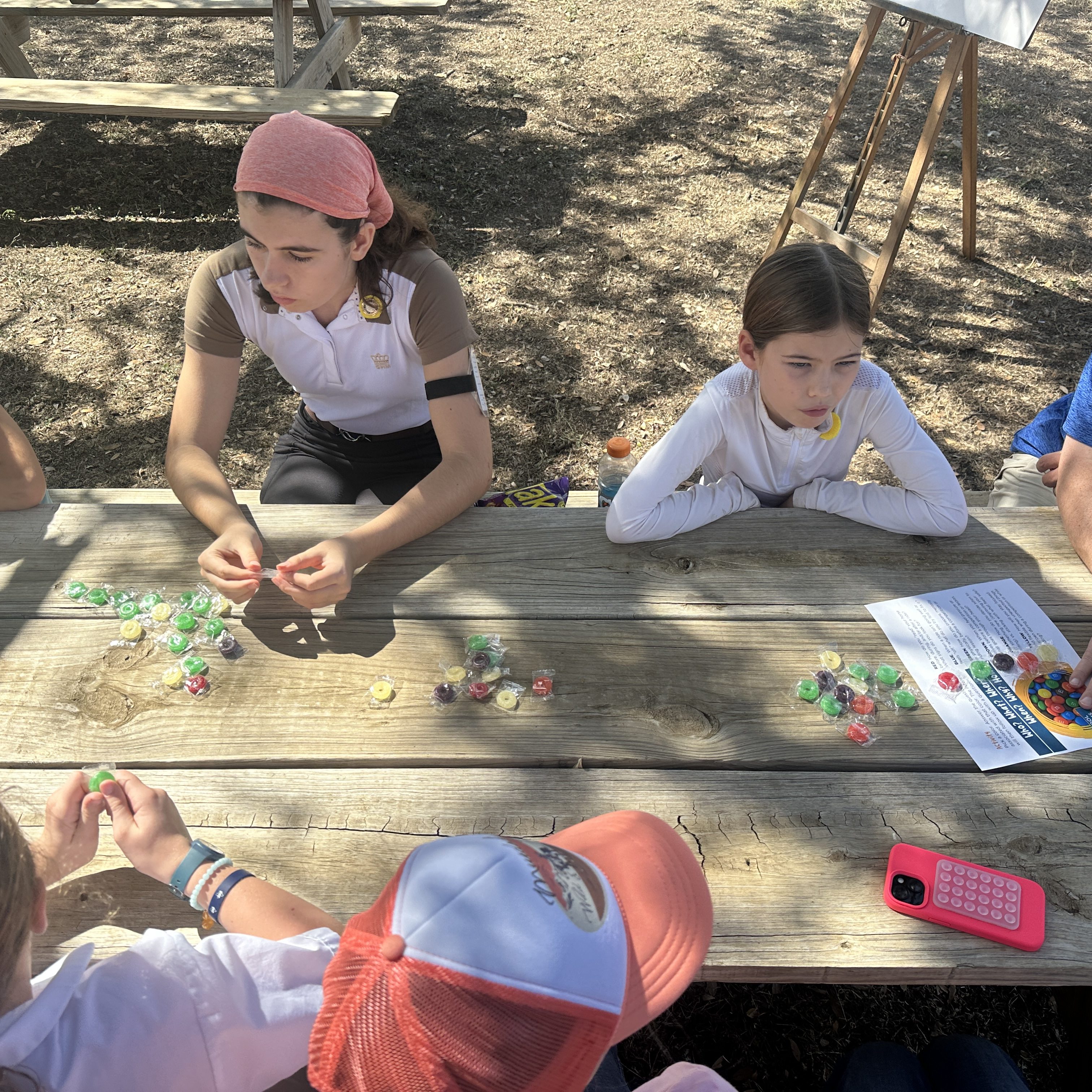
The questions included:
- Red: How do you “read” your horse before, during, or after a ride? What signs do you look for?
- Blue: When a ride isn’t going well or feels “off,” what do you try first to fix it?
- Green: How do you prepare, mentally or physically, before a competition or riding lesson?
- Brown: When you feel pressure or nerves before a competition or lesson, what goes through your head?
- Orange: How do you decide when to try something new to improve your riding versus sticking with what feels safe?
- Yellow: How will you stay focused and flexible when unexpected things happen during a competition or while riding?
The exercise sparked lively conversations across age groups. Younger riders shared honest insights about nerves and excitement, while older riders discussed strategies for managing pressure and making adjustments during a ride. Parents also participated, offering encouragement and thoughtful questions that helped deepen the discussion.
By the end of the session, participants had practiced more than just answering questions—they had practiced listening, observing, and staying composed under pressure. These skills are just as valuable in the barn aisle or inspection area as they are in the saddle.
The workshop reminded riders that being “cool, calm, and collected” isn’t just about competition day. It’s an attitude and a lifestyle—one built on confidence, clear communication, and the ability to respond thoughtfully when things don’t go exactly as planned.
As rally season approaches, these Pony Club riders will carry more than polished tack and prepared horses into the competition grounds. They will also carry the mindset of riders who are ready to communicate clearly, support their teammates, and remain calm in the face of challenges—true marks of being cool, communicative, and collected.
 Cool, Comms, Collected