
As theater students at a private high school in downtown Austin, Texas prepared for their upcoming competition season in the Texas Association of Private and Parochial Schools (TAPPS) One Act Play Division, they recently took time to strengthen a skill that is just as important as memorizing lines or hitting stage marks: communication.
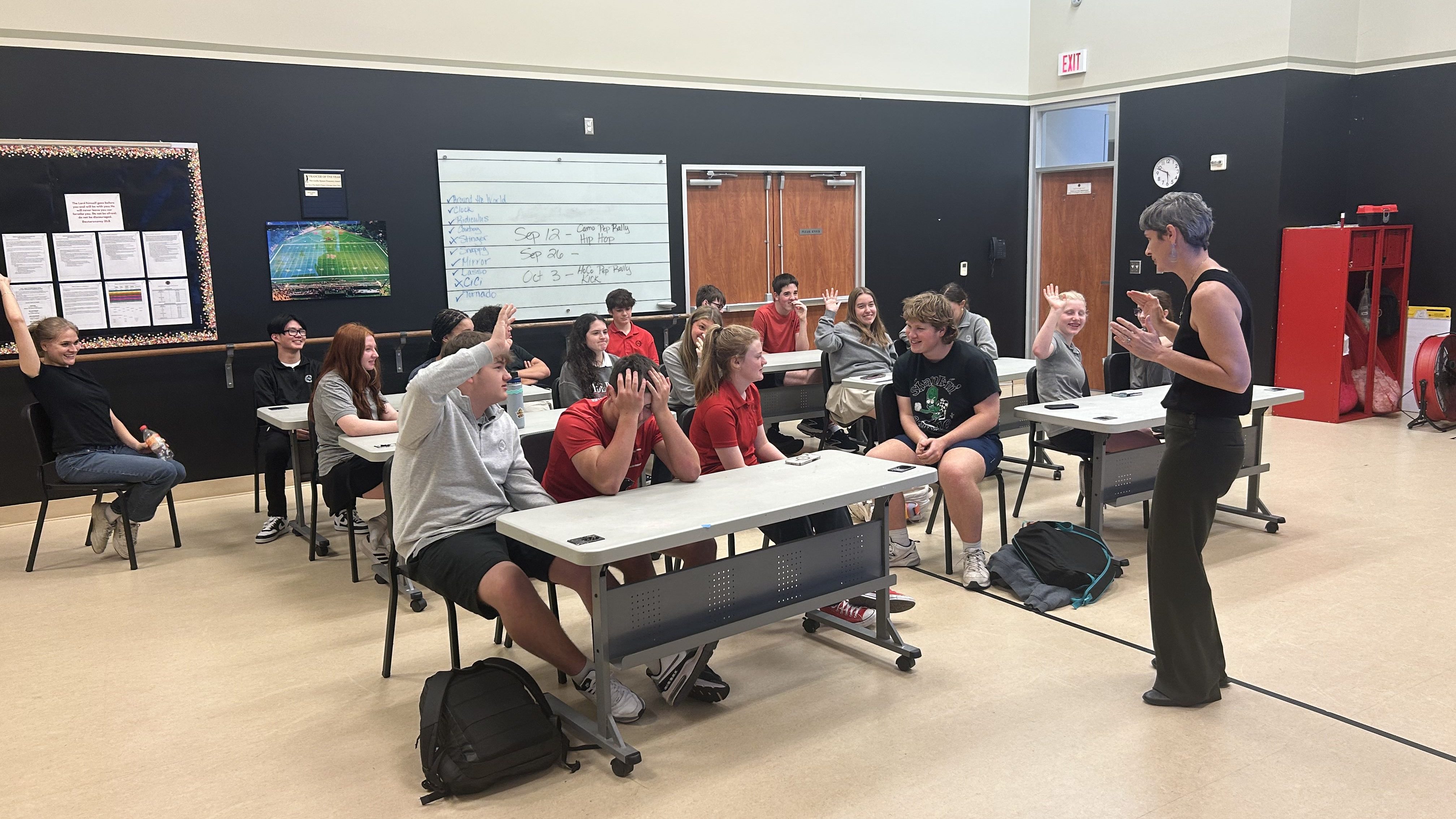
Stephanie Threinen, founder of Cool, Comms, Collected, led an interactive workshop with the theater department focused on the fundamentals of communication and the power of active listening. Students and their teacher/director participated, creating an environment where performers and crew members could reflect on how communication affects every part of a theatrical production.
The TAPPS One Act Play competition challenges schools to present a fully staged play within strict time and technical limits. Students are responsible not only for acting, but also for stage management, technical design, set changes, and backstage coordination. Success depends on precision, teamwork, and trust. Actors must listen closely to cues and fellow performers, while crew members must communicate clearly backstage to ensure seamless transitions. Directors rely on clear dialogue with both cast and crew to bring the production together.
In this fast-paced environment, strong communication skills help prevent mistakes, keep everyone aligned, and build the collaborative spirit that great productions require.
Understanding Communication and Listening
The workshop began with a discussion about what communication really is: a two-way exchange of information, ideas, and emotions. Stephanie emphasized that while hearing happens automatically with our ears, listening is something different.
“You hear with your ears, but you listen with your brain,” she explained.
Active listening requires being fully present—paying attention not only to words, but also to tone, facial expressions, and body language. In theater, where timing and emotional connection are critical, the ability to truly listen can elevate both individual performances and the overall production.
Putting Listening Into Practice
To practice these skills, students participated in an engaging small-group activity using colorful candy as conversation prompts. Each student selected a color and answered a corresponding question, then another student followed up with a thoughtful follow-up question. The exercise encouraged participants to listen carefully, think critically, and respond with curiosity.
The prompts sparked reflection about both theater and teamwork:
- Red: If you could be in any play (past, present, or future), what would it be and why?
- Blue: What’s a skill you’d like to develop through your involvement in theater this year?
- Green: What’s the hardest part about your role in the production?
- Brown: How will you handle stage fright or nervous energy before a performance?
- Orange: What makes a cast a great team to work with?
- Yellow: How will you stay focused and flexible when unexpected things happen on stage or backstage?
The activity created lively conversations and gave students the opportunity to learn more about each other’s perspectives, goals, and challenges. Just as importantly, it demonstrated how asking thoughtful follow-up questions can deepen understanding and strengthen relationships.
Communication Behind the Curtain
In theater, communication extends far beyond dialogue on stage. Stage managers coordinate cues, technicians manage lighting and sound, actors respond to each other’s timing and energy, and directors guide the vision of the performance. When communication is clear and respectful, productions run more smoothly and teams develop stronger trust.
For students preparing for TAPPS One Act Play competition, these communication skills will help them stay focused under pressure, support their teammates, and adapt when something unexpected happens during a performance.
As rehearsals intensify and competition approaches, the workshop served as a reminder that great theater isn’t just about delivering lines—it’s about listening, collaborating, and working together as a team.
Through Cool, Comms, Collected, students left with practical tools to help them communicate more effectively both on stage and behind the scenes—skills that will serve them well throughout the competition season and beyond.

