
This Earth Day event reflection explores how a community planting event at the Lakeway MUD Demonstration Garden became more than a volunteer opportunity—it became a space for intergenerational connection, shared purpose, and meaningful conversation. Through gardening side by side, volunteers of all ages discovered that stewardship begins not with perfection or politics, but with awareness, communication, and small acts of care for the future we all share.
Earth Day has always been about more than the environment. At its heart, it is about people—how we live, what we value, and what we choose to leave behind for future generations.
When the first Earth Day was celebrated in 1970, it emerged during a time when Americans were becoming increasingly aware of the visible impacts of pollution and environmental neglect. Rivers were contaminated, air quality was worsening, and communities across the country were beginning to recognize that the health of the environment and the health of people were deeply connected. What started as a nationwide call for awareness quickly became one of the largest civic participation events in American history, eventually helping lead to the creation of the Environmental Protection Agency and landmark environmental protections.
More than fifty years later, Earth Day is now recognized globally, but its message remains deeply personal: stewardship begins with everyday actions and shared responsibility.
That spirit was alive at the Demonstration Garden for Lakeway MUD (where I work, full time) during this year’s spring planting event, held Saturday, April 18, 2026.
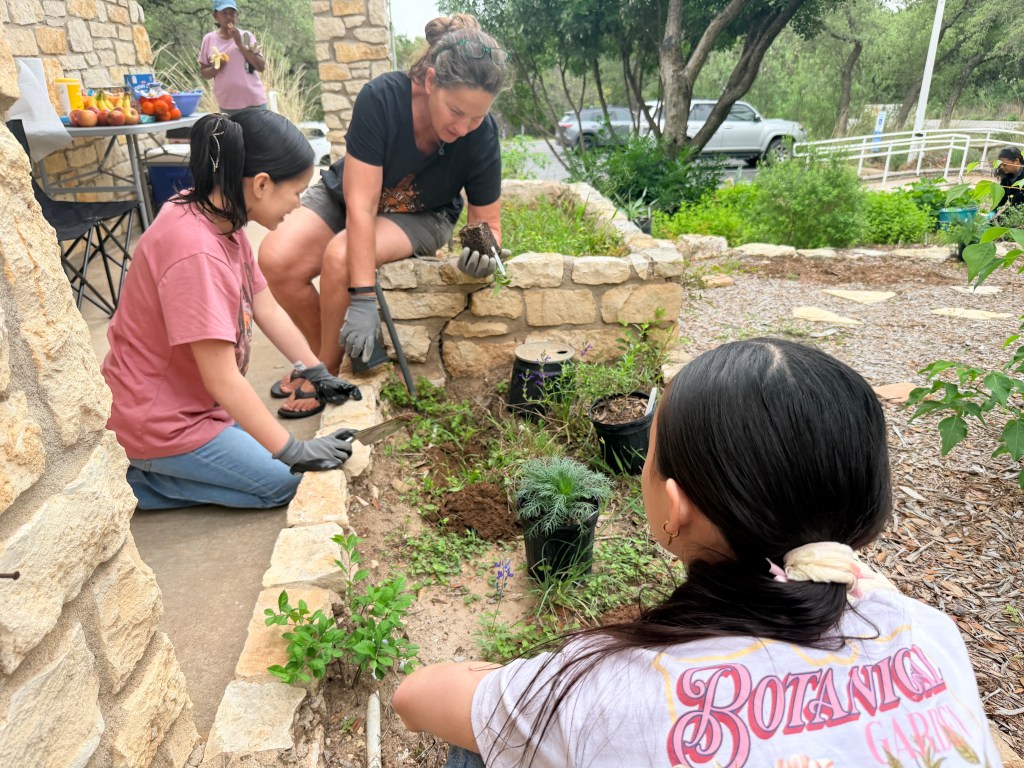
On the surface, it may have looked like a simple volunteer workday. People arrived in gardening gloves and sun hats, carrying water bottles, tools, and trays of plants. Volunteers spread out through the garden to weed beds, trim overgrowth, refresh mulch, and plant native species suited to the Texas Hill Country climate. But beneath the physical work was something much deeper happening—something increasingly rare in modern life.
People were slowing down long enough to truly interact with one another.
Gardening creates a unique kind of communication space because it removes many of the pressures that make conversation feel forced.
There is no conference table, no expectation of perfect eye contact, no performance. Instead, people work shoulder to shoulder with a shared task in front of them. Conversations emerge naturally through the rhythm of the work itself.
A question about a plant becomes a story.
A shared task becomes trust.
Silence becomes comfortable rather than awkward.
At one point during the planting event, an experienced gardener knelt beside a National Junior Honor Society middle school student who had come to earn volunteer hours.
The student carefully lowered a native plant into the soil before asking, “How do you know where everything is supposed to go?”
The gardener smiled and pressed loose soil around the roots.
“You learn to pay attention,” she said. “Some plants need more sun. Some need more space. Some help each other grow better when they’re planted together.”
The student paused before replying, “That kind of sounds like people.”
The gardener laughed softly. “Exactly.”
What followed was not a formal lesson, but something far more meaningful—a real conversation between generations. They talked about drought in Texas, about how landscapes have changed over the years, and about why pollinators matter. The student admitted she had never really thought about where water comes from before. The gardener explained how quickly things can dry out in the Hill Country and how much water can be saved through thoughtful landscaping choices.
But the exchange was not one-sided.
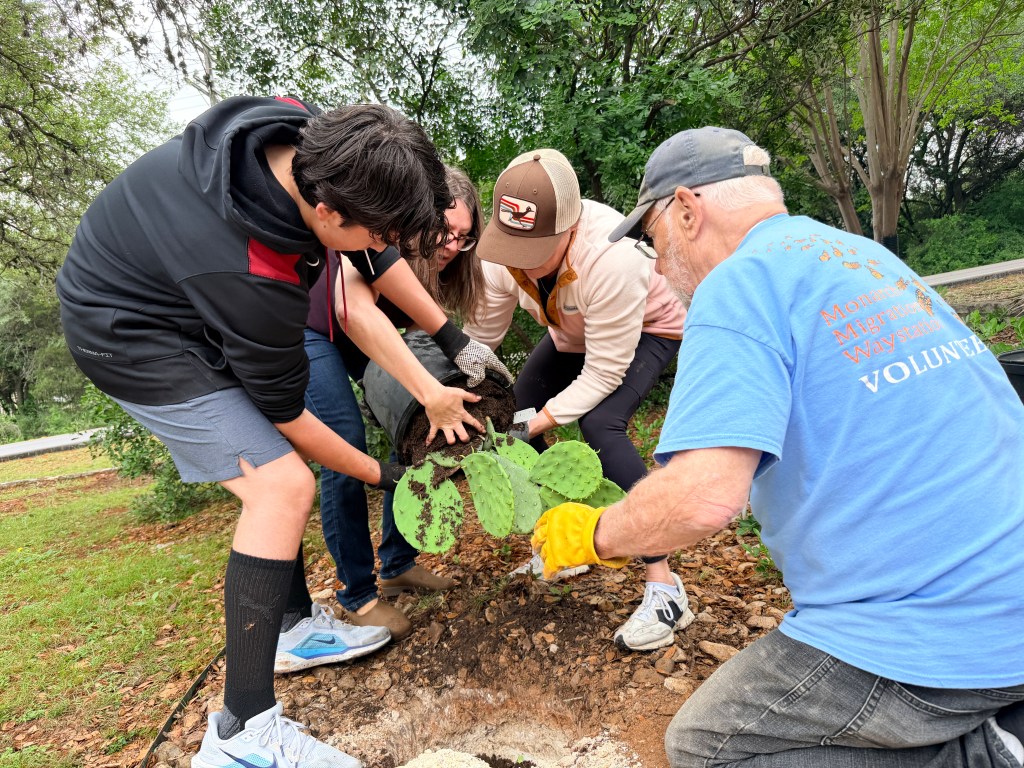
The student spoke about learning climate science in school and about how overwhelming environmental conversations can sometimes feel online. She shared that volunteering helped her feel less anxious because it gave her a way to actually do something.
That moment captures something important about intergenerational communication: wisdom does not move in only one direction.
Older generations often bring lived experience, patience, and long-term perspective. Younger generations bring fresh awareness, new questions, and emotional honesty about the future they are inheriting. When those perspectives come together in shared spaces like a community garden, something powerful happens.
People stop talking at each other and begin learning with each other.
That may be one of the most important lessons Earth Day still offers us today.
Environmental stewardship cannot rest entirely on future generations, nor can it be solved by one generation alone. It requires shared ownership. Shared awareness. Shared effort.
And perhaps that is why gardening feels so symbolic.
When you plant something, you accept an act of faith in the future. You water something you may not fully enjoy yourself. You care for something knowing someone else may one day sit in its shade, admire its blooms, or benefit from the life it supports.
In that way, gardening mirrors community itself.
The Lakeway MUD Demonstration Garden is not just a collection of plants. It is a gathering place where environmental stewardship becomes personal and relational rather than abstract or political. It transforms large-scale concerns—water conservation, biodiversity, sustainability—into visible, tangible experiences people can participate in together.
And importantly, it reminds us that meaningful change rarely happens all at once. It happens through repeated small actions. A plant in the ground. A conversation between generations. A young volunteer beginning to see herself as someone capable of making a difference.
Earth Day continues to matter not because it asks us to fear the future, but because it asks us to care about it.
Not perfectly.
Not politically.
But personally.
One conversation, one garden bed, and one shared act of stewardship at a time.

