If something happened at your house tonight, how many of your neighbors could you call?
Not your friends across town or family members several miles away. I’m talking about the people who live a few doors down, across the street, or around the corner.
Do you know their names? Would you recognize their children? Do you know who lives alone or who might need a little extra help during an emergency? Would someone notice if something wasn’t quite right at your house?
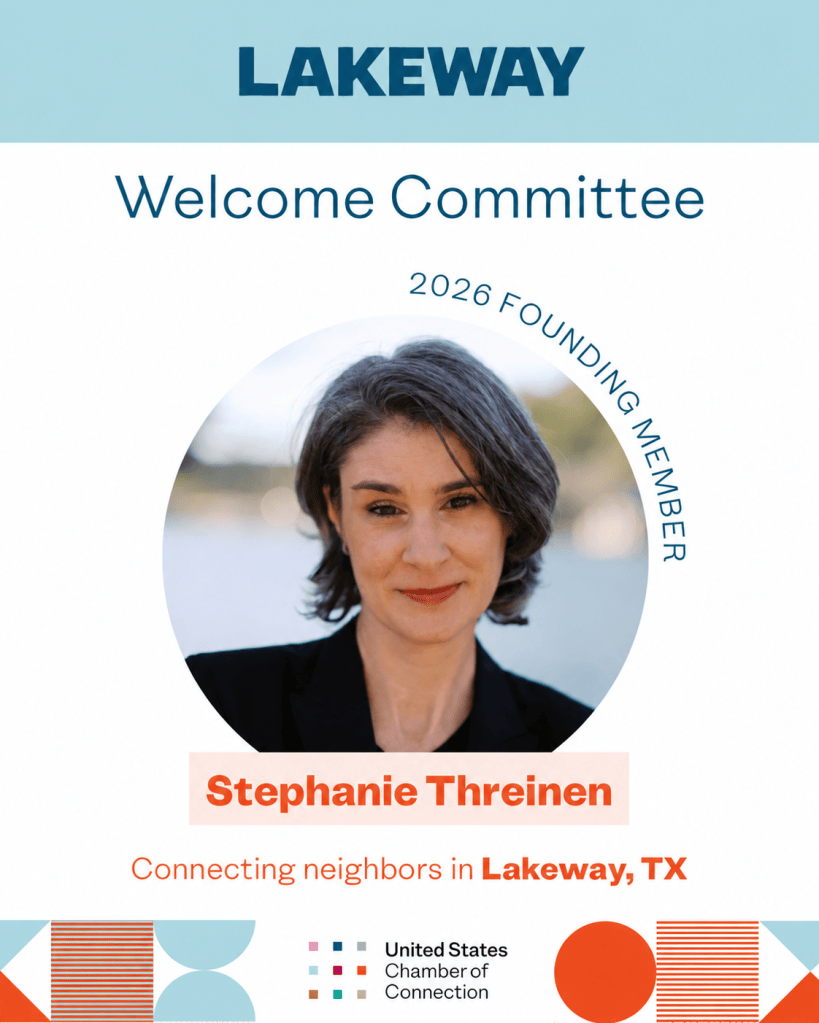
These are questions I’ve been thinking about since becoming a founding member of the U.S. Chamber of Connection’s Welcome Committee, a national initiative dedicated to rebuilding meaningful relationships in our neighborhoods.
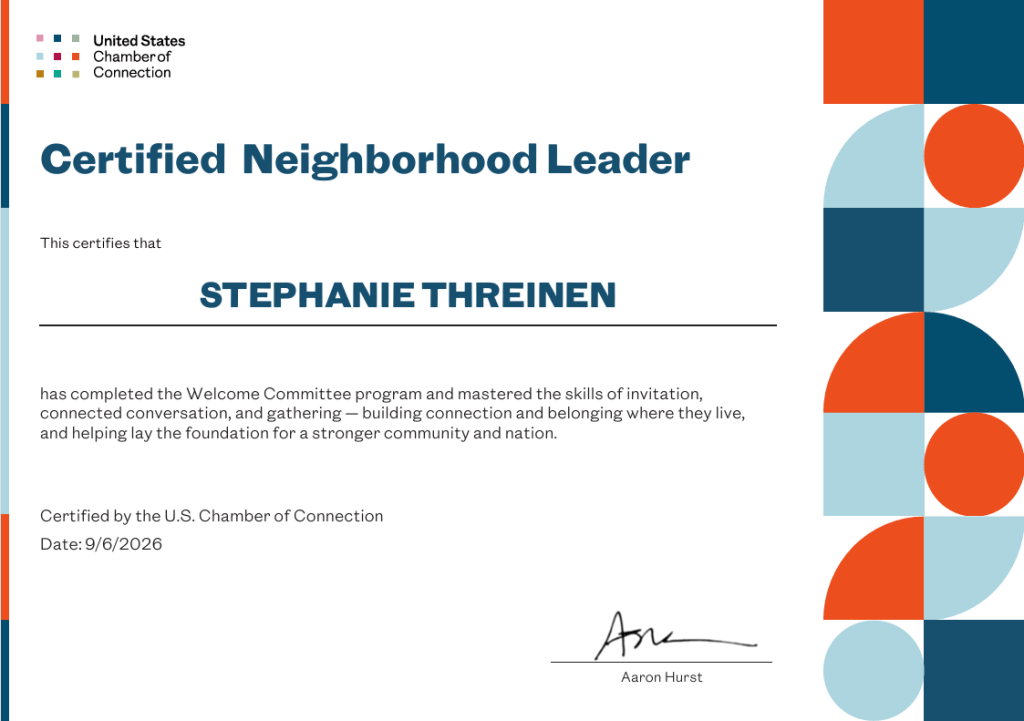
I recently graduated from the program, earning my Neighborhood Leader certification. While I’m proud of that accomplishment, what excites me most is how the experience reinforced something I’ve believed for years:
stronger communities begin with stronger connections, and connection begins with each of us.
We Live Near Each Other. But Do We Really Know Each Other?
Think about how many people you encounter in an ordinary week.
You might wave to a neighbor, recognize someone at the grocery store, exchange pleasantries with a parent at your child’s school, or sit beside the same person at a community event.
But how often do those interactions become meaningful conversations?
Most of us aren’t intentionally avoiding connection. We’re simply busy. We’re working, raising families, caring for loved ones, managing responsibilities, and trying to squeeze a little personal time into our schedules.
Somewhere along the way, getting to know the people around us can fall to the bottom of our priorities.
And yet, those relationships matter.
A neighbor who knows your name might notice when you need help. A friendly conversation might brighten someone’s otherwise lonely day. An invitation to join a neighborhood activity could help a newcomer feel like they finally belong.
Sometimes the difference between feeling isolated and feeling connected is simply knowing that somebody notices you’re there.
Community isn’t just where we live. It’s how we treat the people who live alongside us.
Meet the U.S. Chamber of Connection
The U.S. Chamber of Connection is a national civic organization dedicated to building and sustaining social connection. Its mission is to equip individuals and leaders with practical tools to strengthen relationships, restore trust, and bridge divides across neighborhoods, institutions, and identities.
The organization operates on a simple, but powerful belief:
human connection is foundational to individual and community well-being, and everyone has something meaningful to contribute.
Its work responds to a growing concern about loneliness, isolation, and declining neighborhood relationships. The World Health Organization reported in 2025 that approximately one in six people worldwide experiences loneliness.
But rather than focusing exclusively on the problem, the Chamber asks an empowering question:
What can ordinary people do to make their own communities more connected?
The answer doesn’t require elaborate programs, expensive initiatives, or extraordinary amounts of free time.
It starts with small, intentional actions.
The Welcome Committee: Bringing Neighborliness Back
Launched in March 2026, the Chamber’s Welcome Committee is a national movement of neighborhood leaders working to create communities where people feel seen, included, and valued.
Its purpose goes beyond welcoming someone who has just moved into the neighborhood. It’s about rebuilding a culture in which people take an active interest in one another, whether they’ve lived next door for three weeks or thirty years.
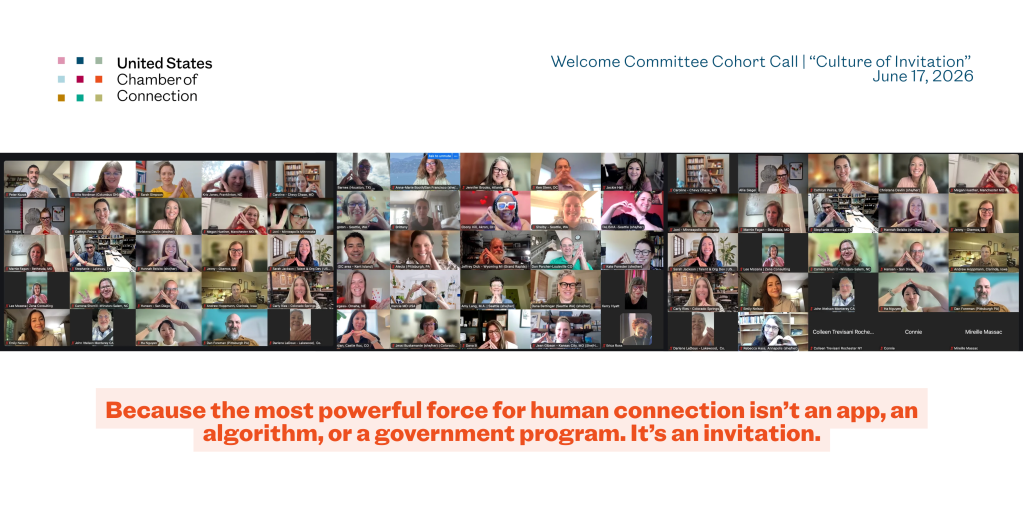
As founding members, we were encouraged to experiment with ways to strengthen connection in our own neighborhoods and share what we learned.
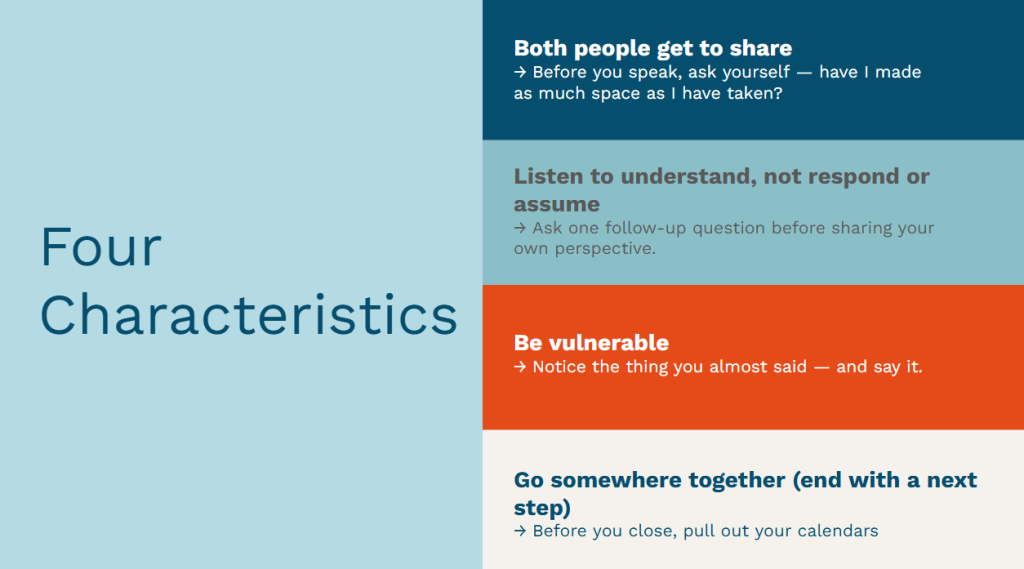
Our training included:
- Creating a Culture of Invitation: Learning how to make personal, welcoming invitations that encourage participation.
- Having Connected Conversations: Practicing intentional listening, curiosity, and meaningful exchanges.
- Hosting and Gathering: Bringing neighbors together through accessible, low-pressure activities.
- Putting Ideas Into Practice: Completing three one-on-one Connected Conversations and organizing a neighborhood gathering.
- Reflecting and Adjusting: Evaluating what worked, what didn’t, and what we could do differently.
One principle especially resonated with me:
stretch yourself just 10 percent beyond what feels comfortable.
Maybe that means introducing yourself to someone you’ve passed for years. Perhaps it’s inviting a neighbor to coffee or organizing a small gathering in your driveway.
The goal isn’t perfection. It’s participation.
And the more we practice connection, the more natural it becomes.
Why This Work Is Personal to Me
As the founder of Cool, Comms, Collected (3Cs), I spend a great deal of time thinking about how communication influences our relationships, choices, and communities.
Through intergenerational workshops, I bring people of different ages and backgrounds together to practice curiosity, storytelling, active listening, collaboration, and conflict management.
I’ve seen teenagers and retirees exchange ideas, people challenge their own assumptions, and strangers discover unexpected common ground.
Those experiences have taught me something important:
we don’t need to be alike to connect and we don’t have to agree to respect one another.
In fact, some of our most valuable interactions happen when we engage with people whose lives look nothing like our own.
Consider how often we gravitate toward people of similar ages, economic circumstances, educational backgrounds, or interests. There’s nothing wrong with finding comfort in shared experiences. But if we limit our relationships to people who are like us, how much are we missing?
What could a teenager learn from an 80-year-old neighbor? What might that older neighbor discover through a young person’s perspective? What could someone who has experienced financial hardship teach a person who has never faced that uncertainty?
And can we recognize the value of someone who has nothing obvious to offer us?
Not a professional opportunity. Not a useful introduction. Not social status or a favor.
Simply another person whose experiences, ideas, and presence have value.
Connection shouldn’t be transactional. We don’t have to benefit personally from knowing someone for that relationship to matter.
That’s why my Welcome Committee certification feels like a natural extension of the 3Cs mission. Both initiatives recognize that communication is more than exchanging information. It’s about building understanding, developing trust, and creating the conditions for people to thrive together.
The Welcome Committee gave me additional tools to take those principles beyond the workshop setting and put them into practice right where I live.
The Six Points of Connection: A Framework for a More Connected Life
One of the most valuable resources I gained through the program was the Chamber’s Six Points of Connection.
Developed from research spanning psychology, healthcare, sociology, and urban planning, this framework identifies six important ways we establish and sustain meaningful social bonds.
Think of them as a personal connection checkup.
Where are you already thriving? Where might something be missing? And what small changes could strengthen your relationships?
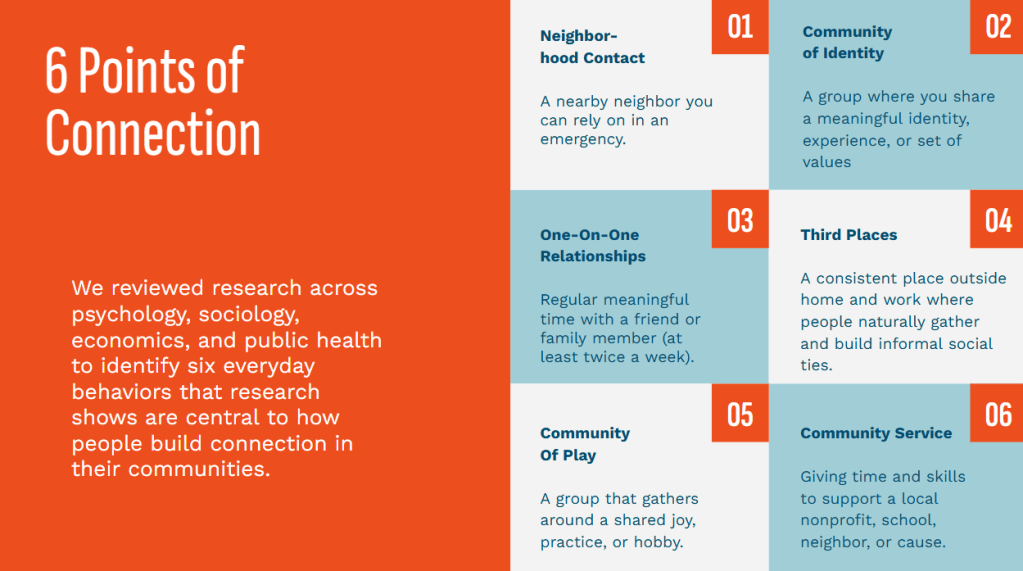
1. Neighborhood Contact: Who Can You Count On?
The goal:
Have a nearby neighbor you can rely on in an emergency.
According to the Chamber’s 2026 Six Points of Connection Report, only 42% of people have a neighbor they can count on in an emergency.
That’s worth thinking about, particularly in communities where severe weather, power outages, or unexpected emergencies can leave people needing immediate assistance.
But neighborhood relationships aren’t only valuable during a crisis.
They’re built through ordinary interactions: bringing in someone’s trash can, checking on a neighbor after a storm, sharing extra vegetables from your garden, or remembering someone’s name.
Try this: Introduce yourself to one neighbor you don’t know. Exchange contact information with someone nearby. Ask an older neighbor how long they’ve lived in the area and what they’ve seen change.
2. Community of Identity: Where Do You Belong?
The goal:
Be part of a group where you share meaningful values, experiences, or a sense of identity.
We all need spaces where we feel understood and accepted. That might be a cultural organization, faith community, veterans group, parent network, or another group connected by shared experiences.
These relationships can provide support during life’s transitions and help us feel grounded.
But belonging to one group doesn’t have to mean excluding others. Feeling secure in our own identities can give us greater confidence to engage with people whose backgrounds differ from ours.
Try this: Reconnect with a group that reflects something meaningful to you. Then look for an opportunity to learn about a community whose experiences are different from your own.
3. One-on-One Relationships: Who Really Knows You?
The goal:
Spend meaningful time regularly with friends or family.
The Chamber’s research found that only 28% of people get together with friends or family at least twice a week.
Strong relationships need attention, and consistency often matters more than elaborate plans.
A weekly walk, a phone call, lunch with a friend, or an uninterrupted conversation with a family member can deepen relationships over time.
Try this: Reach out to someone you’ve been meaning to reconnect with. Rather than saying, “We should get together sometime,” suggest a specific day and activity.
4. Third Place: Where Do You Feel at Home Outside Your Home?
The goal:
Have a consistent gathering place outside home and work.
Sociologist Ray Oldenburg popularized the concept of the Third Place—an informal social environment where people gather and relationships develop naturally.
Think libraries, parks, coffee shops, community centers, or places of worship.
I particularly appreciate this concept because our local libraries are more than places to borrow books. They’re places where people of different generations and backgrounds can come together, learn from one another, and develop a sense of belonging.
Try this: Find a welcoming public space and visit regularly. Attend a library program, join a community discussion, or simply take time to talk with someone you recognize.
5. Community of Play: Who Do You Have Fun With?
The goal:
Participate in activities with others around a shared interest or hobby.
Not every meaningful relationship begins with a serious conversation. Sometimes it begins with laughter, creativity, or working together toward a common goal.
Book clubs, walking groups, gardening, sports, art classes, and game nights create natural opportunities for people to interact.
This is something I see firsthand through 3Cs workshops. When participants collaborate on an activity, differences in age or background can become less important than the experience they’re sharing.
Try this: Join a group centered around something you enjoy, or invite others to try a new activity together. Be intentional about including someone who might otherwise be left out.
6. Community Service: Who Are You Showing Up For?
The goal:
Contribute your time and abilities to support a neighbor, school, nonprofit, or community cause.
The Chamber reports that only 26% of people regularly volunteer.
Service creates opportunities to build relationships through shared purpose. Whether you’re planting trees, helping at a school, supporting a food pantry, or checking on a neighbor, you’re contributing to something larger than yourself.
And service doesn’t have an age requirement.
Children can help clean a park. Teenagers can mentor younger students. Working adults can share professional skills. Retirees can contribute decades of experience and knowledge.
Everyone has something to give.
Try this: Find one local cause you care about and participate in a way that fits your abilities and schedule. Better yet, invite someone from a different generation to join you.
The Eight Door Challenge: Start Where You Live
One of my favorite Welcome Committee exercises was also one of the simplest: think about the eight doors closest to your own.
Depending on where you live, those might be apartments across the hall, homes on your street, or neighboring properties along a country road.
Now ask yourself:
- How many of those neighbors do I know by name?
- How many would feel comfortable asking me for help?
- Who might be new, isolated, or looking for connection?
- What could I learn from the people living closest to me?
- What is one small action I could take this week?
You don’t need to become best friends with everyone on your street. You don’t even need to agree about everything.
But imagine how different your neighborhood might feel if people simply knew one another well enough to notice, care, and occasionally show up.
Community Connection at Every Age
One of the principles I emphasize through Cool, Comms, Collected is that
everyone has value, regardless of age, background, or life experience.
And everyone can contribute to a more connected community.
Here are a few ideas for different stages of life:
- Children: Learn neighbors’ names, make welcome cards, participate in neighborhood cleanups, or help with a community garden.
- Teenagers: Volunteer alongside older adults, help neighbors with technology, organize a game night, or invite someone new to join an activity.
- Young adults: Explore local organizations, join recreational groups, attend public events, and get to know people beyond your immediate social circle.
- Parents and working adults: Invite another family to the park, connect with neighbors during activities you’re already attending, or organize a simple potluck.
- Older adults and retirees: Share your experiences, mentor younger generations, participate in library programs, or help preserve neighborhood stories and traditions.
These ideas aren’t limited to particular ages. That’s the point.
The strongest communities create opportunities for generations to interact rather than keeping everyone separated into their own age groups.
Too Busy to Build Community? Start Small.
I understand how difficult it can be to add one more thing to an already full calendar.
But here’s something the Welcome Committee reinforced: connection doesn’t always require making more time. Sometimes it simply requires using the time we already have more intentionally.
Going for a walk? Invite a neighbor.
Taking your children to the park? Ask another family to join.
Attending a community event? Bring someone who might not otherwise go.
Working in your garden? Stop and introduce yourself to someone passing by.
Making dinner? Consider inviting someone to share it.
And remember that an invitation doesn’t have to be accepted to be worthwhile. People have different schedules, responsibilities, comfort levels, and circumstances.
A “no” today isn’t necessarily a rejection of the relationship. Respect their answer, leave the door open, and keep practicing kindness.
Five Small Ways to Begin This Week
- Learn one new name. Introduce yourself to someone you regularly see but haven’t met.
- Extend one personal invitation. Make it specific, simple, and low-pressure.
- Ask one better question. Move beyond “How are you?” to something that invites a meaningful response.
- Visit one community gathering place. Explore a library event, neighborhood activity, or local volunteer opportunity.
- Practice one act of neighborliness. Offer assistance, share something, or check in on someone who might appreciate being remembered.
None of these requires a committee, a budget, or a special occasion.
They simply require someone willing to begin.
How One Connection Can Change an Entire Community
Imagine a neighborhood where people know one another by name.
A new family moves in, and someone welcomes them.
A teenager discovers that an older neighbor shares an interest in art or gardening.
A resident recovering from surgery finds a meal waiting at the door.
A family struggling through a difficult season knows there are people nearby who care.
Neighbors who disagree about community issues still greet one another respectfully and remain willing to listen.
These aren’t extraordinary acts.
But together, they create something extraordinary: a community built on trust, familiarity, empathy, and shared responsibility.
And connection has a way of multiplying.
One neighbor invites another. A small gathering becomes a regular tradition. Someone who once felt excluded begins inviting others. Children grow up watching adults demonstrate what being a good neighbor looks like.
Over time, those individual choices can change the culture of an entire neighborhood.
That’s what makes this work so meaningful to me.
Connection Is a Practice, Not a Personality Trait
Graduating from the Welcome Committee was a meaningful milestone, but I don’t see it as the end of an experience. I see it as another step in a much larger effort to help people become more intentional about how they interact with the world around them.
The U.S. Chamber of Connection and Cool, Comms, Collected approach this work from complementary directions.
The Chamber provides a research-informed framework for strengthening our social connections and practical opportunities to put those ideas into action.
Cool, Comms, Collected helps people become more intentional about their communication to make those connections more meaningful—curiosity, active listening, storytelling, collaboration, and the ability to engage respectfully across differences.
Together, they reinforce something I believe deeply:
We don’t have to think alike, live alike, or agree with one another to care about one another.
We just have to be willing to recognize the humanity in the people around us.
So here’s my challenge to you:
Think about the eight doors closest to yours.
Who lives behind them?
What stories haven’t you heard?
And what might change if you decided to get to know just one of those people?
Because a connected community isn’t something somebody else builds for us.
We are the community. And sometimes, changing it begins with opening a door.
Learn More and Get Connected
To explore the research and community-building initiatives behind this work, visit the U.S. Chamber of Connection website and learn about its Welcome Committee and Six Points of Connection.
Or contact me to schedule a Cool, Comms, Collected workshop to discover how curiosity, intentional communication, and intergenerational engagement can help strengthen your relationships and community.